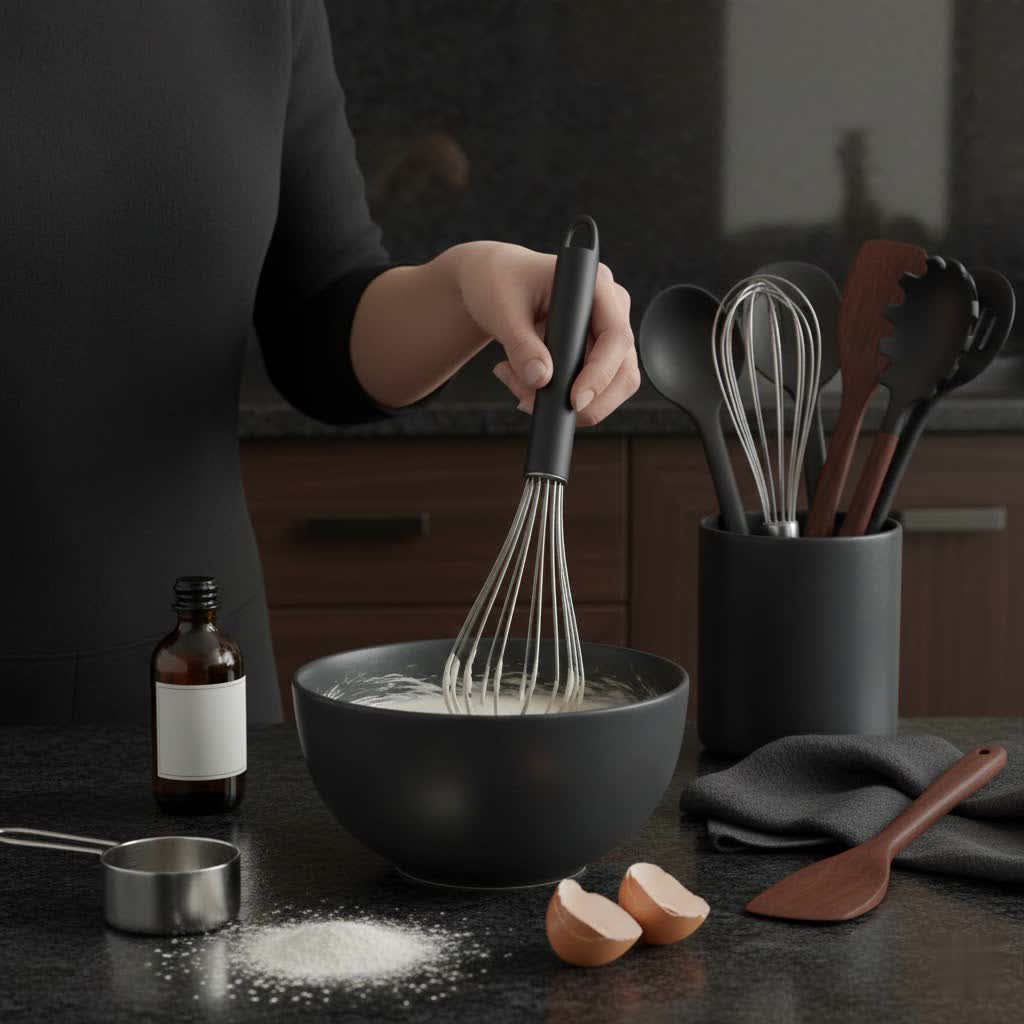
Stepping into a professional kitchen, you’ll quickly notice a chef’s discerning choice in tools. Among the myriad of utensils, the whisk stands out as a fundamental instrument, but not all whisks are created equal. While the familiar balloon whisk is a common sight in home kitchens, many professional chefs gravitate towards the French whisk, valuing its distinctive narrow design for specific culinary tasks. But what exactly makes this elegant tool a professional’s secret weapon, and why is its slender profile preferred over wider alternatives? Let’s delve into the world of whisks to uncover the unique advantages of the French whisk and understand why its precision and control are indispensable for mastering delicate sauces, smooth emulsions, and perfectly blended mixtures.
What is a Whisk and Why Do You Need One?
A whisk is an essential kitchen utensil designed primarily to blend ingredients smoothly and to incorporate air into mixtures. Often called a “whip” in professional culinary settings, it features a handle attached to a series of wire loops, which vary in shape and thickness depending on the whisk type. These dynamic tools are indispensable for a wide range of culinary tasks, from light aerating to vigorous mixing, making them fundamental for preparing everything from delicate desserts to savory sauces.
The history of whisks traces back centuries, evolving from bundles of twigs to the sophisticated wire designs we know today. Early versions, like the French fouet, were simple yet effective, laying the groundwork for the diverse range of whisks available. The continuous innovation in whisk design reflects the ongoing pursuit of culinary perfection, with each iteration addressing specific needs in the kitchen.
While there are numerous whisk types, some of the most common include the balloon whisk, French whisk, flat whisk, and silicone whisk. Each is tailored for different consistencies and volumes, offering versatility to both home cooks and professional chefs. Understanding these distinctions is key to unlocking their full potential in your cooking.
Classifying Whisks by Purpose
Different culinary tasks demand different whisk designs, each optimized to achieve specific textures and consistencies. Selecting the correct whisk can significantly impact the outcome of a dish, making the process more efficient and enjoyable.
Whisks for Eggs and Cream
|
Our Picks for the Best Whisk in 2026
As an Amazon Associate I earn from qualifying purchases.
|
||
| Num | Product | Action |
|---|---|---|
| 1 | TEEVEA Danish Dough Whisk Stainless Steel Wooden Handle for Sourdough Pizza Bread Baking |

|
| 2 | OXO Good Grips Mini Whisk |
|
| 3 | Whisks for Cooking, 3 Pack Stainless Steel Whisk for Blending, Whisking, Beating and Stirring, Enhanced Version Balloon Wire Whisk Set, 8"+10"+12" |
|
| 4 | NileHome Silicone Whisk Set 8" 10" Kitchen Whisk Kitchen Wisk Wire Whisks for Cooking, Whisking, Blending, Beating, Stirring-Black |
|
| 5 | Walfos Silicone Whisk,Stainless Steel Wire Whisk Set of 3 -Heat Resistant 480°F Kitchen Whisks for Non-stick Cookware,Balloon Egg Beater Perfect for Blending,Whisking,Beating,Frothing & Stirring,Black |
|
| 6 | KitchenAid Classic Utility Whisk, 10.5 Inch, Black |
|
| 7 | OXO Good Grips 11-Inch Balloon Whisk |
|
| 8 | OXO SteeL 9-Inch Whisk |
|
| 9 | Amazon Basics Stainless Steel Wire Whisk Set for Cooking, Different Sizes, Easy to Hold Ergonomic Handle, 3 Piece, Black/Silver |
|
| 10 | NileHome Stainless Steel Whisk Set 8" 10" 12" Kitchen Whisk Balloon Whisk Kitchen Wisk Wire Whisks for Cooking, Whisking, Blending, Beating, Stirring-3 Pack… |
|
For tasks requiring maximum air incorporation, such as whipping egg whites into stiff peaks for meringue or transforming heavy cream into fluffy whipped topping, balloon whisks are typically the go-to choice. Their wide, bulbous shape and ample spacing between wires allow them to agitate a large volume of air into liquid quickly, creating light and airy textures. While a French whisk can incorporate air into eggs for an omelet, it’s less efficient for achieving the voluminous results needed for meringue or stiff cream.
Whisks for Batter and Dry Ingredients
When it comes to mixing thin batters, such as those for crepes or vinaigrettes, the French whisk’s precise nature shines. Its narrower profile and denser wires ensure ingredients are thoroughly combined without over-aerating, which can be crucial for delicate preparations where unwanted bubbles might compromise texture. For thicker batters or mixing dry ingredients, dough whisks or even the more robust French whisk (with its thicker wires) can be effective in breaking down lumps and ensuring even distribution.
Whisks for Sauces and Soups
This is where the French whisk truly excels and why it’s a favorite among chefs. Its tapered, narrow design allows it to reach into the corners and edges of pots and pans, effectively scraping up fond (the caramelized bits at the bottom of a pan that add immense flavor) and preventing scorching. This precision is invaluable for creating perfectly smooth gravies, béchamel, and other delicate sauces, ensuring no lumps remain and ingredients are fully emulsified. The dense wire configuration breaks down flour clumps more efficiently than the wider spacing of a balloon whisk, leading to smoother results.
Specialty Whisks for Specific Purposes
Beyond the main categories, specialty whisks cater to niche culinary needs. Mini whisks, for example, are perfect for whisking small quantities of ingredients directly in a mug or small bowl, ideal for single servings of vinaigrette or beating a couple of eggs. Flat whisks are designed for shallow liquids, allowing full contact with the bottom of the pan, which is excellent for making pan gravies or deglazing. These specialized tools highlight the diversity and thoughtful design in the world of whisking.
Factors to Consider When Choosing a Whisk
Selecting the perfect whisk involves more than just picking the first one you see. Several key factors contribute to a whisk’s performance, durability, and user comfort.
Material (Stainless Steel, Silicone, Plastic)
The material of your whisk significantly impacts its utility and longevity.
- Stainless steel is the most common choice, prized for its durability, rust resistance, and ability to withstand high temperatures. It’s suitable for almost any task but can scratch non-stick surfaces.
- Silicone-coated whisks offer a non-scratch alternative, making them ideal for use with non-stick cookware. They are also heat-resistant and often dishwasher safe. However, the silicone coating can sometimes be less effective at breaking up lumps compared to bare metal wires.
- Plastic whisks are generally less durable and suitable for lighter tasks or when working with delicate bowls that might scratch easily. They are typically the most affordable option.
Size and Shape
The size and shape of a whisk should align with the tasks you perform most frequently. Larger, more bulbous balloon whisks are excellent for aerating in big bowls, while smaller, narrower French whisks are perfect for stirring sauces in smaller pots or creating emulsions in narrow containers. A varied collection of sizes ensures you have the right tool for any volume or container.
Handle (Comfortable, Non-Slip)
A comfortable, non-slip handle is crucial for effective and enjoyable whisking, especially during prolonged tasks. Look for handles that fit well in your hand, offer a secure grip even when wet or greasy, and are made from materials like silicone or textured plastic. A well-designed handle reduces hand fatigue and provides better control over the whisking motion.
Durability and Cleanability
High-quality whisks are built to last, with wires securely fastened to the handle to prevent bending or detaching. Stainless steel whisks are particularly durable. Ease of cleaning is also a significant factor; whisks with fewer crevices or gaps where food can get trapped are generally easier to maintain. Many whisks are dishwasher safe, adding to their convenience.
Comparing Popular Whisk Types in the Market
Understanding the distinct characteristics of different whisk types is essential for making informed choices in the kitchen. While many whisks can perform similar basic functions, their designs make them excel in specific areas.
| Whisk Type | Design Characteristics | Primary Uses | Key Advantage |
|---|---|---|---|
| Balloon Whisk | Wide, bulbous shape; thin, flexible wires; wide spacing | Whipping cream, egg whites, meringues; aerating light batters | Incorporates maximum air for light, fluffy results |
| French Whisk | Tapered, narrower profile; thicker, denser wires | Smooth sauces, gravies, emulsions; mixing thin batters; reaching pan corners | Precision stirring, lump prevention, efficient scraping of fond |
| Flat Whisk | Flat, paddle-like shape; wires parallel to the handle | Stirring shallow liquids, deglazing pans, making pan gravies | Maximizes contact with flat bottom surfaces |
| Ball Whisk | Handle with individual wire balls at the end | Whisking lumpy ingredients in shallow liquids, breaking up clumps | Efficiently reaches all parts of a container, easy to clean |
While a balloon whisk is a versatile all-rounder for aerating, the French whisk truly shines in tasks requiring precision and thorough blending in confined spaces, making it a favorite for sauce work. The flat whisk and ball whisk offer specialized solutions for unique challenges, demonstrating the tailored nature of whisk design.
Top Whisks: A Comparison Table
Choosing the “best” whisk often comes down to specific needs and preferences. However, certain models consistently receive high marks for their performance, durability, and ergonomic design. Here’s a look at some top contenders based on common culinary applications:
| Whisk | Pros | Cons | Estimated Price |
|---|---|---|---|
| OXO Good Grips 11-Inch French Whisk | Excellent for sauces/emulsions; comfortable, non-slip handle; durable stainless steel | Tighter wires can be slightly harder to clean than balloon whisks | $10-$15 |
| KitchenAid Classic 11-Inch Balloon Whisk | Ideal for aeration (whipped cream, egg whites); sturdy construction; easy to clean | Less effective for reaching pan corners or thick, lump-prone mixtures | $8-$12 |
| Cuisinart CTG-00-FW French Whisk | Tapered design for effective scraping; good for small batches and delicate sauces; dishwasher safe | May feel less robust for heavy-duty mixing compared to larger options | $7-$10 |
Prices are approximate and can vary by retailer and promotions.
The OXO Good Grips French Whisk is a strong contender for its balance of professional performance and user comfort, especially for sauce-making. For general aeration, the KitchenAid Classic Balloon Whisk remains a popular and reliable choice. The Cuisinart French Whisk offers a solid, budget-friendly option for those seeking the precision of a French whisk without a significant investment.
Whisk Buying Guide
Navigating the array of whisks available can be overwhelming, but a systematic approach will help you find the perfect tool for your kitchen.
- Identify Your Usage Needs: Start by considering what you’ll use the whisk for most often. Are you frequently making delicate sauces and gravies, or are you primarily whipping cream and egg whites? This will dictate whether a French whisk, balloon whisk, or even a specialty whisk is most appropriate.
- Understand Different Whisk Types: Familiarize yourself with the basic types of whisks and their unique advantages. Know when a narrow French whisk is superior for precision versus a wide balloon whisk for aeration.
- Compare Price and Quality: While it’s tempting to opt for the cheapest option, investing in a high-quality whisk made from durable materials like stainless steel will pay off in the long run. Good quality ensures better performance and a longer lifespan.
- Read User Reviews: Customer reviews offer invaluable insights into a whisk’s real-world performance, comfort, and durability. Look for consistent feedback regarding handle comfort, ease of cleaning, and effectiveness for specific tasks.
- Purchase from Reputable Suppliers: Buy your whisks from established kitchenware retailers or trusted online vendors. This ensures you receive authentic products and have recourse if issues arise.
By carefully evaluating these factors, you can confidently choose a whisk that not only meets your culinary demands but also enhances your cooking experience.
Tips for Using and Maintaining Your Whisk
Even the best whisk can underperform if not used and maintained correctly. Mastering proper technique and care ensures your whisk remains a reliable tool for years.
When using a whisk, the key is often in the motion. For aeration, a rapid circular or figure-eight motion with a balloon whisk maximizes air incorporation. For sauces with a French whisk, a swift back-and-forth or circular motion, ensuring the narrow head scrapes the bottom and corners of the pan, prevents lumps and burning. Always ensure your wrist is doing most of the work to avoid arm fatigue.
To clean your whisk effectively, immediately rinse it under warm water after use to prevent food from drying onto the wires. For a deeper clean, especially if working with sticky ingredients, whisk the tool in a bowl of warm, soapy water. Many stainless steel and silicone whisks are dishwasher safe, but always check the manufacturer’s instructions. Store whisks by hanging them or placing them in a utensil crock to prevent wires from getting bent or tangled.
Common mistakes include using the wrong whisk for the task, which can lead to inefficient mixing or suboptimal results. Another error is neglecting immediate cleaning, allowing food to harden and making the whisk difficult to sanitize. Avoid using metal whisks in non-stick pans unless they are silicone-coated, to prevent scratching the surface. By following these simple guidelines, your whisk will consistently deliver excellent performance.
“A chef’s whisk is an extension of their hand, particularly when coaxing the perfect texture from a delicate sauce. The French whisk, with its precise reach, offers an unmatched level of control that is indispensable in professional kitchens.” – Chef Antoine Dubois, Head Chef at Le Gourmand Bistro
Conclusion
The French whisk, with its distinctive narrow and tapered design, stands as a testament to specialized tool design in the culinary world. While the versatile balloon whisk excels at aeration, the French whisk earns its place in professional kitchens—and increasingly, in ambitious home cooking—through its unparalleled ability to precisely stir, emulsify, and prevent lumps in sauces, gravies, and delicate batters. Its capacity to reach into the smallest corners of a pan is a game-changer for achieving smooth textures and capturing every bit of flavor. By understanding its unique advantages and incorporating it into your culinary arsenal, you’re not just buying a tool; you’re investing in precision, control, and a significant upgrade to your sauce-making prowess.
Are you ready to experience the difference a specialized French whisk can make in your own kitchen?
Frequently Asked Questions
What is the primary difference between a French whisk and a balloon whisk?
A French whisk has a narrower, more tapered shape with denser wires, making it ideal for precise stirring, emulsifying, and reaching pan corners. A balloon whisk features a wider, more bulbous shape with more open wires, designed to incorporate maximum air for whipping and aerating mixtures.
Why do chefs prefer French whisks for sauces?
Chefs prefer French whisks for sauces because their narrow profile and dense wires effectively reach into the corners of pots and pans, scraping fond and preventing lumps. This design ensures thorough blending and emulsification, crucial for perfectly smooth and consistent sauces without scorching.
Can a French whisk be used for whipping cream or egg whites?
While a French whisk can incorporate some air into eggs for an omelet or gently aerate cream, it is not as efficient as a balloon whisk for achieving high volume or stiff peaks. Its primary strength lies in precision blending rather than maximizing air incorporation.
What materials are best for a French whisk?
Stainless steel is generally considered the best material for a French whisk due to its durability, rust resistance, and ease of cleaning. Silicone-coated options are also available for use with non-stick cookware, offering protection against scratching.
How do I clean a French whisk effectively?
To clean a French whisk effectively, rinse it immediately after use under warm water. For thorough cleaning, whisk it in a bowl of warm, soapy water. Most stainless steel and silicone French whisks are dishwasher safe, simplifying the cleaning process.