Introduction (100-150 words):
- Hook: Ever wonder why some whisks feel perfect for fluffy egg whites, while others tackle thick batters with ease?
- Introduce the core topic: wire thickness.
- Mention piano wire (thin) and thick wire whisks (French).
- Briefly state what the article will cover: understanding differences, choosing the right tool for the job.
H2: Understanding the Whisk: More Than Just Wires
Table is empty.- Definition & Purpose: What is a whisk? How does it work (turbulence, air incorporation)?
- A Brief History: (General, not too detailed, perhaps just mention its evolution as a kitchen staple).
- The Anatomy of a Whisk: Handle, wire loops, varying thickness, arrangement, quantity.
- Materials Matter: Stainless steel for durability, silicone for non-stick.
H2: The Delicate Touch: Exploring Piano Wire Whisks
- What are Piano Wire Whisks? Description (thin, springy, often bulbous/balloon-shaped).
- Why Thin Wires Excel:
- Superior aeration for light mixtures.
- Creating volume: whipped cream, meringues, egg whites.
- Gentle blending of dry ingredients.
- The “springiness” and movement.
- Ideal Applications: List specific recipes.
- Pros and Cons: (Emphasis on aeration vs. struggle with heavy doughs).
H2: The Power Player: Decoding Thick Wire (French) Whisks
- What are Thick Wire Whisks? Description (thicker, less flexible, narrower/tapered shape, often called French whisks).
- Why Thick Wires Dominate:
- Strength for heavy batters and dense mixtures.
- Precision for emulsifying sauces.
- Reaching corners of pots.
- Better for breaking down lumps in thicker liquids.
- Ideal Applications: List specific recipes (sauces, gravies, thick batters).
- Pros and Cons: (Emphasis on power vs. potential for ingredients getting stuck).
H2: Piano vs. Thick Wire: A Head-to-Head Comparison
- Comparison Table:
| Feature | Piano Wire Whisk (Thin) | Thick Wire Whisk (French) |
| :————– | :————————— | :————————— |
| Wire Thickness | Thin, flexible, springy | Thicker, more rigid |
| Shape | Bulbous, rounded (balloon) | Narrow, tapered |
| Primary Use | Aeration, light mixing | Heavy mixing, emulsifying |
| Best For | Whipped cream, meringue, eggs | Sauces, gravies, thick batters |
| Key Advantage | Maximize air incorporation | Power through dense mixtures, precision |
| Potential Drawback | Can struggle with thick mixtures | Batters can get stuck |
H2: Choosing Your Whisk: A Practical Buying Guide
- Assess Your Culinary Needs: What do you cook most often?
- Consider Whisk Type and Wire Thickness: Align with cooking habits.
- Material and Handle Comfort: Stainless steel, silicone-coated, ergonomic grips.
- Size and Shape: Match to bowls/pots.
- Investing Wisely: Start with versatile, then specialize.
H2: Tips for Whisk Care and Longevity
- Immediate Cleaning: Prevent hardening.
- The “Whisking in Soapy Water” Method: Effective cleaning.
- Hand Wash vs. Dishwasher: Depending on handle material.
- Proper Storage: Prevent wire bending.
Conclusion (80-120 words):
- Recap the main points: wire thickness dictates performance.
- Reiterate the value of both piano wire and thick wire whisks.
- Emphasize choosing the right tool for optimal results.
- CTA: Experiment, enjoy the culinary journey.
- Open question.
FAQ (5-7 questions):
- Q: Can a piano wire whisk be used for heavy batters?
- Q: Are French whisks good for whipping cream?
- Q: What is the ideal material for a durable whisk?
- Q: How do I clean a whisk effectively?
- Q: Is a thick wire whisk better for making roux?
SEO Optimization Strategy:
- Primary keyword: “Wire Thickness Whisk”, “Piano Wire Whisk”, “Thick Wire Whisk” – in H1, first H2, intro, conclusion.
- Semantic keywords: “French whisk”, “balloon whisk”, “aeration”, “emulsifying”, “heavy batters”, “delicate sauces”, “stainless steel whisk”, “silicone whisk”, “whisk types”, “kitchen tools”, “culinary guide”.
- Long-tail: Incorporated into H2/H3s and FAQ.
- Readability: Short paragraphs, clear headings, bullet points.
- E-E-A-T: Leveraged professional sources (WebstaurantStore, Misen), expert tone, practical advice.
Image Plan:
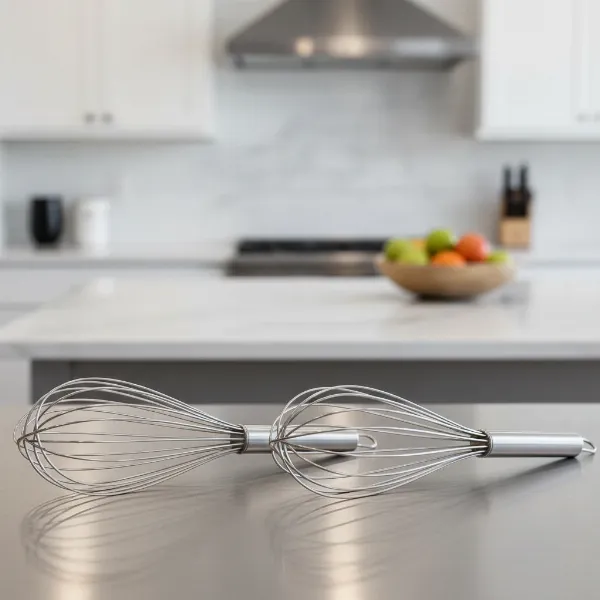 A close-up comparison of thin piano whisk wires and thicker French whisk wires demonstrating their different gauges and flexibility.
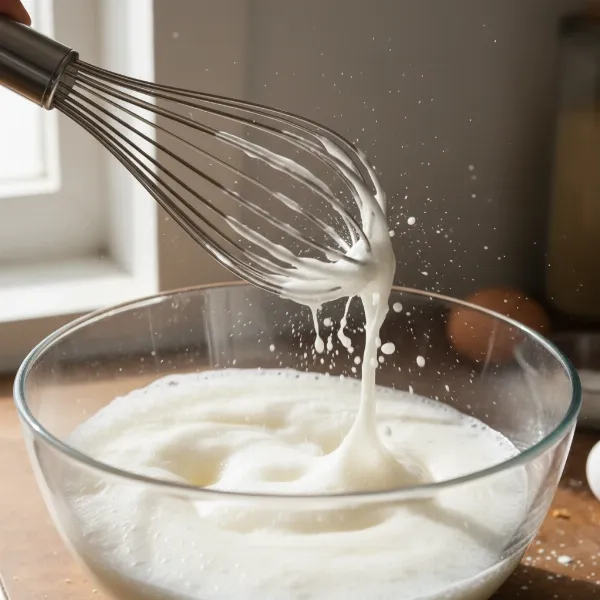 A piano wire whisk vigorously whipping egg whites in a glass bowl, creating frothy peaks.
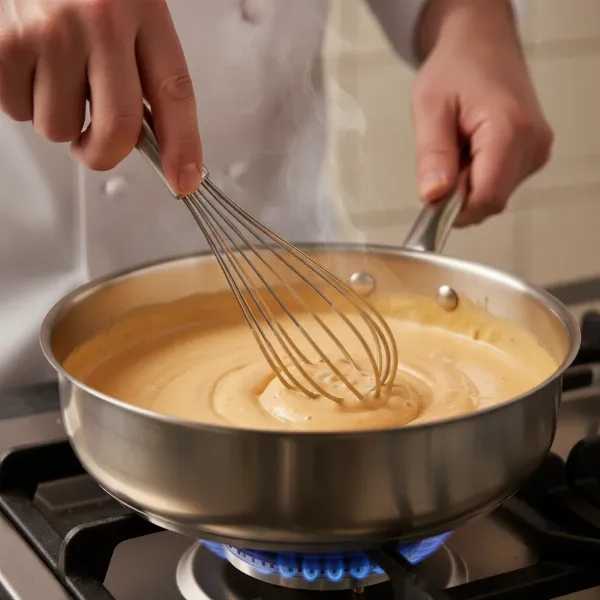 A chef using a thick wire French whisk to emulsify a rich sauce in a saucepan.
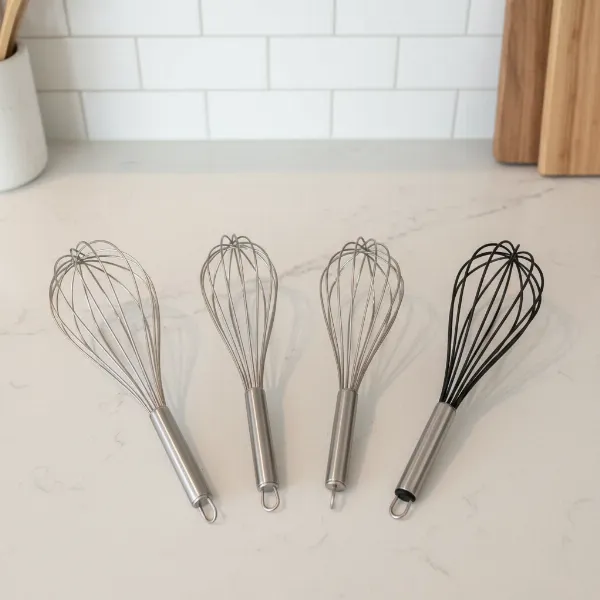 A selection of different whisks (piano, French, flat, silicone) neatly arranged on a modern kitchen counter.
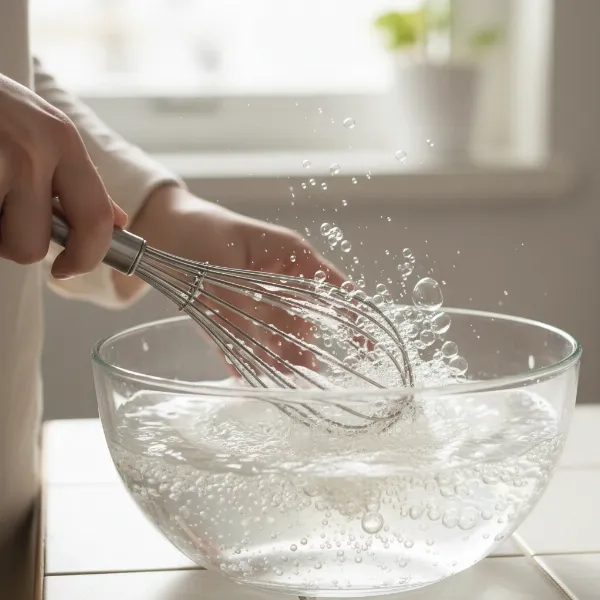 A whisk being cleaned in a bowl of warm soapy water with gentle whisking motions.
I’m ready to write the article based on this plan.