Have you ever prepared a cup of matcha, only to find it marred by frustrating lumps and a lackluster froth? It’s a common dilemma that can turn a potentially serene ritual into a moment of culinary disappointment. Achieving that perfectly smooth, vibrant green, and exquisitely frothy matcha isn’t just about the quality of your tea; it’s about mastering the art of whisking. This comprehensive guide will equip you with the knowledge, tools, and techniques to consistently prepare a velvety smooth matcha, free from unwelcome clumps, transforming your daily tea experience.
The Essence of Matcha Whisking: Why Clumps Occur and How to Conquer Them
Matcha is far more than just powdered green tea; it’s a finely milled suspension, meaning the tea particles are blended into water rather than dissolving like traditional tea leaves steeped in water. This unique characteristic is precisely why whisking is not merely a suggestion but an essential step in its preparation. Proper whisking not only breaks down the fine powder, preventing it from settling into a muddy consistency, but also incorporates air, creating the signature frothy top that enhances both taste and aroma.
The primary reason for matcha clumps often lies in its incredibly fine particle size and inherent static electricity. When exposed to air or moisture, these tiny particles tend to cling together, forming stubborn lumps that resist smooth integration into water. Furthermore, using water that’s too hot can “burn” the delicate tea, leading to bitterness and hindering the formation of a stable foam, while cold water struggles to properly suspend the particles. Understanding these fundamental aspects is the first step towards achieving clump-free matcha.
Your Essential Matcha Toolkit: Choosing the Right Whisk and Accessories
To truly master the art of whisking matcha, having the right tools is paramount. While modern alternatives exist, traditional Japanese tools are designed for optimal performance and an authentic experience.
The Mighty Chasen (Bamboo Whisk): Your Primary Weapon
The chasen, a bamboo whisk, is the cornerstone of matcha preparation. Hand-carved from a single piece of bamboo, its numerous delicate prongs are specifically designed to effectively aerate the matcha and break down clumps. The number of prongs, or “tines,” is an important consideration:
- 80-Prong Chasen: A versatile choice, offering a good balance for both vigorous whisking and a relatively fine froth.
- 100-Prong Chasen: Often preferred for ceremonial grade matcha, providing a finer, smoother texture and a richer foam.
- 120-Prong Chasen: Delivers the finest, most velvety froth, ideal for high-quality, nuanced matcha.
For beginners, a chasen with around 70-80 prongs is often recommended as a good starting point. While plastic or metal whisks can be used, bamboo chasens offer superior whisking action, are gentler on the delicate tea, and provide a more traditional experience.
Beyond the Whisk: Other Indispensable Tools
Beyond the chasen, a few other accessories will elevate your matcha preparation:
- Matcha Bowl (Chawan): A wide-mouthed bowl allows ample space for proper whisking motion, giving you better control to break up clumps effectively. Warming your chawan beforehand can also help maintain the water temperature during whisking.
- Fine Mesh Sieve: Your secret weapon against clumps. Sifting matcha powder is a non-negotiable step, breaking up any existing lumps and eliminating static electricity, ensuring the powder integrates smoothly with water.
- Matcha Scoop (Chashaku): A traditional bamboo scoop used for measuring matcha. While not strictly necessary, it adds to the ritual and helps in dispensing the precise amount of powder.
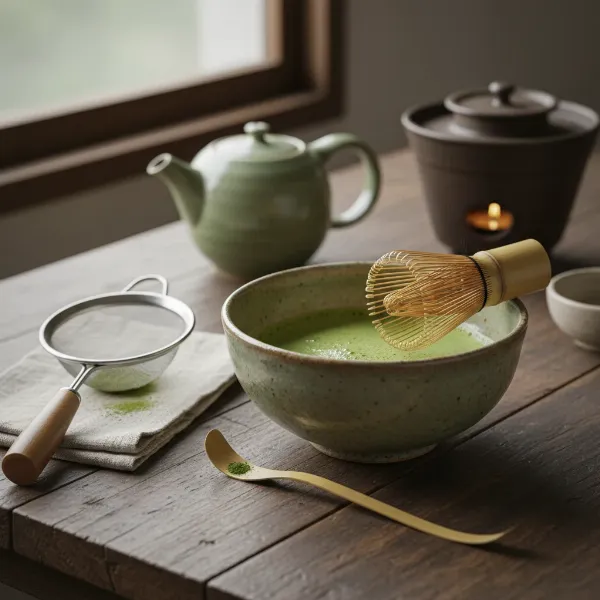 A collection of essential matcha whisking tools including a chasen, chawan, and sifter, arranged neatly.
Mastering the Art: Key Factors for a Clump-Free Matcha Experience
Achieving that perfect, smooth cup of matcha goes beyond just the whisk itself; it involves attention to detail at every stage of preparation.
Quality Matcha and Proper Storage
The journey to clump-free matcha begins with the quality of your powder. Higher-grade ceremonial matcha is typically more finely milled and of superior quality, which naturally makes it less prone to clumping than lower-grade culinary matcha. However, even the finest matcha can clump if not stored correctly.
Always keep your matcha powder in an opaque, airtight, resealable container, shielded from light, air, heat, and moisture. Exposure to these elements can degrade its quality, flavor, and increase its propensity to clump.
The Perfect Water Temperature
Water temperature plays a critical role in both the taste and texture of your matcha. Boiling water (100°C/212°F) is too hot; it can “burn” the delicate tea, resulting in a bitter taste and making it difficult to achieve a good froth. Conversely, water that is too cool won’t adequately suspend the matcha particles, leading to a thin, underdeveloped texture.
The ideal water temperature for whisking matcha ranges between 70-80°C (160-175°F). This temperature range allows the matcha’s nuanced flavors to shine through without bitterness and promotes optimal foam formation. Using filtered or soft water is also recommended, as minerals in hard water can interfere with how matcha mixes.
Bowl Preparation: Warming Up for Success
Before adding your matcha, take a moment to warm your chawan (matcha bowl). Pour a small amount of hot water (around 70-80°C) into the bowl and let it sit for about 20-30 seconds. You can also briefly soak your chasen in this warm water to soften its bamboo bristles, making them more flexible and less likely to snap during whisking. After warming, discard the water and thoroughly dry the bowl. A warm, dry bowl provides an optimal environment for whisking, helping to prevent temperature drops and ensuring the matcha adheres properly.
Step-by-Step Guide: Whisking Matcha to Velvety Smoothness
With your tools ready and ingredients prepped, it’s time to whisk your way to perfection. Follow these steps for consistently smooth, frothy matcha:
- Sift Your Matcha: Begin by sifting 1-2 teaspoons (approximately 2-4 grams) of matcha powder directly into your warmed chawan using a fine mesh sieve. Gently tap the sieve or use a spoon to press the powder through. This crucial step breaks down any lumps and eliminates static electricity, laying the foundation for a smooth beverage.
- Create a Paste: Add a small amount of hot water (around 10-20 ml or 1-2 tablespoons) to the sifted matcha. Using your chasen, gently stir the matcha and water together until a smooth, lump-free paste forms. This initial paste method is a highly effective way to ensure every particle is thoroughly incorporated before more water is added.
- Add Remaining Water: Once you have a smooth paste, add the rest of your hot water (approximately 60-80 ml or 2-3 ounces, adjusting to your preferred strength).
- Master the Whisking Motion: Hold your chasen lightly with a relaxed wrist. Immerse the whisk into the matcha mixture and begin whisking vigorously in a rapid “M” or “W” motion across the bottom of the bowl. The key is speed and light pressure, not forceful stirring. Ensure the bristles touch the bottom and sides of the bowl to incorporate air effectively and break down any remaining tiny particles.
- Achieve the Perfect Froth: Continue whisking for about 15-20 seconds. As a thick, frothy layer forms on the surface, you’ll see tiny, consistent bubbles, indicating a well-whisked matcha. If larger bubbles appear, gently break them up by lightly sweeping the whisk over the surface.
- Serve Immediately: Once the desired froth is achieved, enjoy your perfectly whisked matcha right away. Matcha is best consumed fresh, as the particles will eventually settle.
> “The secret to superior matcha lies in the finesse of the wrist and the warmth of the heart. Every whisking motion is a dance, transforming powder into pure liquid silk.” – Chef Akira Tanaka, Master Tea Ceremony Instructor
Here’s a quick overview of common whisking mistakes and how to fix them:
| Mistake | Consequence | Solution |
|---|---|---|
| Not sifting matcha | Large clumps in your tea | Always sift matcha powder through a fine mesh sieve. |
| Using boiling water | Bitter taste, poor froth formation | Use water between 70-80°C (160-175°F). |
| Whisking too slowly or gently | Weak froth, remaining clumps | Whisk vigorously in a rapid “M” or “W” motion. |
| Not making a paste first | Difficulty breaking down lumps evenly | Start with a small amount of water to create a smooth paste before adding more. |
| Using a cold bowl | Rapid temperature drop, less effective whisking | Preheat your chawan with hot water before preparation. |
| Whisking in a circular motion | Less aeration, uneven suspension | Focus on the “M” or “W” zigzag motion for optimal froth and dissolution. |
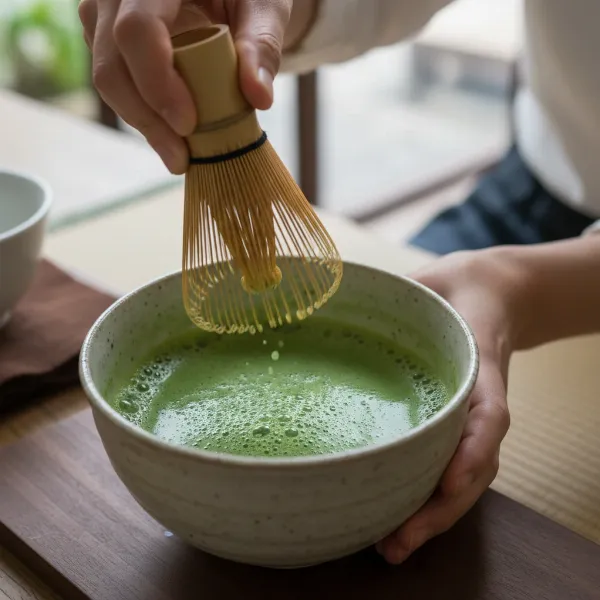 Close-up shot of hands holding a chasen, performing the "M" or "W" whisking motion in a chawan with bright green matcha tea.
Elevate Your Experience: Choosing and Caring for Your Chasen
The chasen is a delicate tool that, with proper care, will serve you for many delightful cups of matcha.
Selecting Your Chasen: Prong Count and Material Matters
As discussed, the number of prongs on your chasen impacts the texture of your matcha. For a standard ceremonial tea, an 80- or 100-prong chasen is an excellent choice. If you aim for an exceptionally fine and smooth consistency, a 120-prong whisk is ideal. While most chasens are made from white bamboo, some may use purple or black bamboo, primarily for aesthetic appeal. When possible, opt for a chasen made in Japan, particularly from Takayama, known for its centuries-old tradition of chasen craftsmanship. These are often of the highest quality and durability.
Longevity Secrets: Chasen Usage and Maintenance Tips
To ensure your chasen lasts and performs its best, mindful usage and maintenance are key:
- Pre-soak: Always pre-soak your chasen in warm water for 20-30 seconds before use. This softens the bamboo bristles, preventing breakage and enhancing its flexibility.
- Gentle Whisking: While vigorous, your whisking motion should be light-handed. Avoid pressing down too hard on the bottom of the bowl, which can damage the delicate prongs.
- Immediate Rinse: After each use, rinse your chasen thoroughly with warm water. Do not use soap, as it can be absorbed by the bamboo and affect the taste of your matcha. Gently rub the prongs to remove any matcha residue.
- Whisk Holder (Kusenaoshi): Store your clean chasen on a whisk holder. This specialized ceramic stand helps maintain the chasen’s shape, prevents the inner prongs from flattening, and allows it to air dry properly, extending its lifespan.
- Air Dry Completely: Ensure your chasen is completely dry before storing it away to prevent mold or mildew growth.
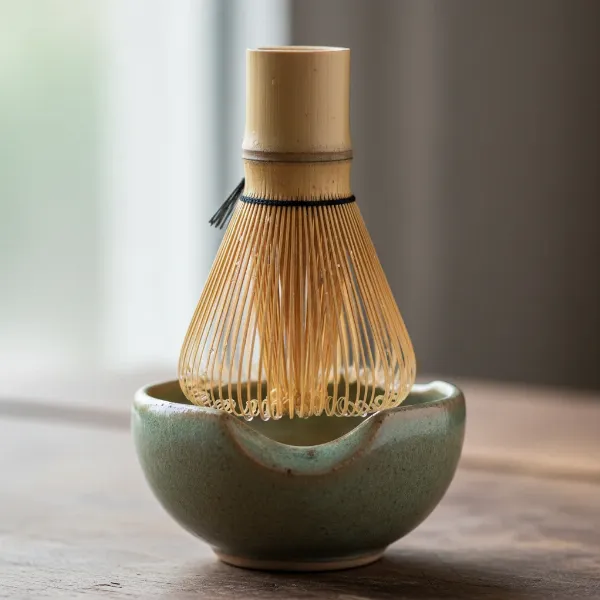 A bamboo chasen resting on a ceramic whisk holder (kusenaoshi) after being used, with water droplets visible, indicating recent rinse.
Conclusion
Achieving a perfectly smooth, frothy, and clump-free cup of matcha is a rewarding endeavor that transforms a simple beverage into a delightful ritual. By understanding the nature of matcha powder, utilizing the right tools like a quality bamboo chasen and a fine mesh sieve, and diligently following precise steps—from sifting and creating a paste to mastering the “M” or “W” whisking motion at the ideal water temperature—you can bid farewell to stubborn lumps. Embrace these techniques, practice patience, and soon you’ll be enjoying matcha that not only invigorates your senses but also exemplifies the art of perfect preparation. What aspect of your matcha ritual are you most excited to refine?
Frequently Asked Questions
Why can’t I use a regular metal whisk or fork for matcha?
While a metal whisk or fork can stir matcha, they lack the numerous fine prongs of a bamboo chasen. These delicate bristles are essential for breaking up tiny matcha particles thoroughly, incorporating air effectively, and creating the characteristic fine, stable froth that enhances matcha’s flavor and texture.
What happens if my water is too hot when whisking matcha?
If the water is too hot (above 80°C/175°F), it can “burn” the delicate matcha tea, causing it to taste bitter and astringent. High temperatures also prevent the formation of a good, stable foam, leaving you with a flat, less appealing cup of matcha.
How much matcha powder should I use for one serving?
For a standard serving of usucha (thin tea), typically 1-2 teaspoons (about 2-4 grams) of matcha powder are used per 60-80 ml (2-3 ounces) of hot water. Adjusting the amount of powder can alter the strength and intensity of your matcha to suit personal preference.
Can I use cold water to whisk matcha without clumps?
While it’s possible to whisk matcha with cold water, it’s generally harder to achieve a clump-free and frothy result. Cold water struggles to suspend the fine matcha particles as effectively, often leading to a thinner consistency and less stable foam. For best results, use water within the recommended hot temperature range.
How long should I whisk matcha to ensure it’s clump-free and frothy?
You should whisk matcha vigorously for about 15-20 seconds. The goal is to achieve a uniform suspension and a thick, frothy layer with fine, small bubbles on top. Continue whisking until you’re satisfied with the texture and consistency, ensuring no visible clumps remain.