In the vibrant world of culinary arts, precision in technique is paramount. Yet, two terms often used interchangeably—whisk and whip—frequently sow confusion in the kitchen. While both actions involve agitating ingredients, their nuances in purpose, intensity, and desired outcome are distinct and crucial for achieving perfect results. Understanding the fundamental differences between whisking and whipping is key to elevating your cooking and baking from good to gourmet.
Unraveling the Whisk: Tool and Technique
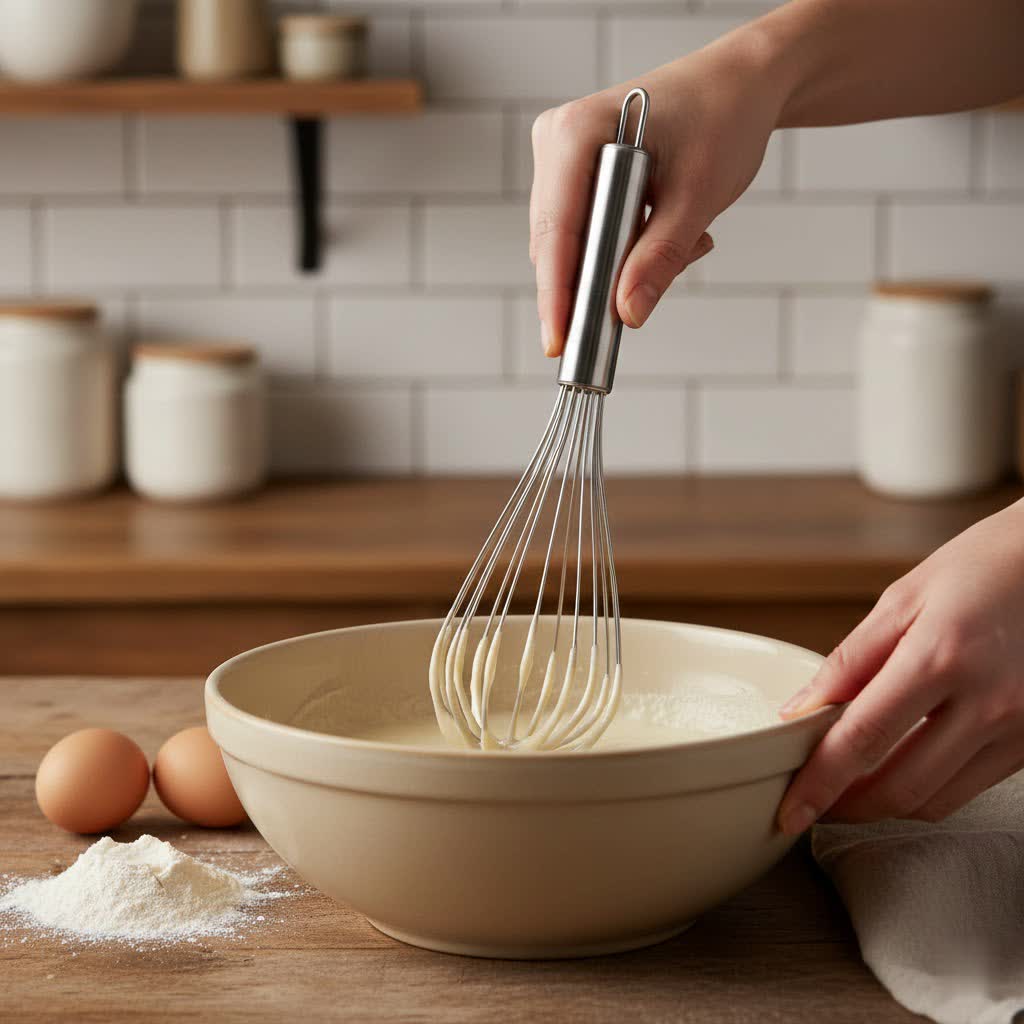
A whisk is a ubiquitous kitchen utensil, typically featuring a handle with wire loops or tines at its end, designed for blending, mixing, and stirring ingredients. Whisks come in various shapes and sizes, from balloon-shaped for general aeration to flat heads for sauces. The action of “to whisk” generally involves beating ingredients together in a circular motion, with the primary goals being to combine them thoroughly or to incorporate a moderate amount of air, creating a light and fluffy texture. This technique is essential for emulsifying vinaigrettes, blending dry ingredients, or lightly aerating eggs for an omelet.
Historically, whisks have evolved from bundles of twigs to the sophisticated wire tools we use today. Their design, particularly the flexible wires, maximizes movement within a mixture, which is beneficial for creating even consistencies and gentle aeration.
Decoding the Whip: Action and Outcome
“To whip” refers to the vigorous beating of ingredients to incorporate a significant amount of air, aiming to increase volume and create a thick, frothy, or creamy texture. This technique is characterized by its intensity and the transformative effect it has on ingredients. Common applications include making whipped cream, meringues, and certain cake batters where considerable aeration is required to achieve a light, airy structure.
While “whip” primarily describes an action, the term can also colloquially refer to the utensil itself, often used synonymously with “cooking whisk.” The vigorous motion of whipping is specifically geared towards stabilizing air pockets, ensuring that mixtures like egg whites achieve stiff peaks or cream becomes luxuriously thick.
Whisking vs. Whipping: The Core Distinction
The core difference between whisking and whipping lies in their intent and outcome. Whisking is broadly about combining and lightly aerating. It’s about achieving an even consistency, blending ingredients smoothly, and introducing just enough air for a lighter texture, such as in scrambled eggs or pancake batter. The goal might be to prevent lumps or to create a homogenous mixture.
Whipping, conversely, is a more aggressive, focused technique aimed at maximum aeration and volume. When you whip, you are intentionally transforming the ingredient’s structure to make it significantly lighter, thicker, and often frothy or stiff, as seen with meringues or heavy cream. The emphasis is on trapping as much air as possible to build volume and stability.
Using the wrong technique can significantly impact your recipe. For example, over-whisking (applying too much air where only blending is needed) can lead to a dense, over-mixed product, while insufficient whipping can result in a flat, heavy mixture when an airy one is desired.
Essential Whisk Types for Every Culinary Task
While the terms “whisk” and “whip” can describe actions performed with various tools, the “whisk” utensil itself comes in several forms, each optimized for different culinary tasks.
Balloon Whisk (Piano Whisk)
Often considered the “all-purpose” whisk, the balloon whisk (or piano whisk) features numerous thin, flexible wires arranged in a bulbous shape. Its design maximizes air incorporation, making it ideal for tasks requiring significant aeration.
- Uses: Whipping cream, beating egg whites for meringues, making light and fluffy eggs.
French Whisk
Similar to a balloon whisk but with a slimmer profile and slightly thicker wires, the French whisk is more rigid. Its narrower shape makes it effective for reaching into the corners of pots and pans, and its thicker wires handle heavier mixtures better.
- Uses: Sauces, emulsions (like vinaigrettes and mayonnaise), batters, custards.
Flat Whisk (Roux Whisk)
Characterized by its looped wires arranged in a flattened shape, the flat whisk is specifically designed for use in shallow pans. It allows for maximum contact with the bottom of the pan, making it excellent for scraping up ingredients and preventing burning.
- Uses: Making roux, gravies, sauces in shallow pans, removing poached eggs.
Other Specialized Whisks
- Kettle Whisk (Ball Whisk): Features a large, cage-like ball and a long handle, perfect for mixing large volumes in deep kettles or stock pots.
- Mini Bar Whisk: A miniature balloon whisk for whipping egg whites in small glasses for cocktails.
- Conical Whisk: Elongated, stiff wires for reaching into corners of pots, suitable for sauces and gravies.
- Spiral Whisk: A singular wire loop coiled tightly, designed to stay in contact with the pan bottom to break up clumps in gravies and sauces.
- Dough Whisk (Danish Dough Whisk): Flat profile with an outer circle and inner oval, ideal for handling tough doughs and batters without overworking them.
Tools for Whisking and Whipping: Beyond the Hand Whisk
While a manual whisk is a fundamental tool, modern kitchens offer a range of equipment to assist with whisking and whipping tasks.
- Handheld Whisks (Manual): These are versatile and perfect for smaller quantities or when precise control is needed. They are essential for both light whisking and more vigorous hand-whipping.
- Electric Mixers:
- Hand Mixers: Portable and efficient for medium-sized tasks like whipping cream or beating eggs. They significantly reduce the effort and time compared to manual whisking.
- Stand Mixers: Equipped with a whisk attachment, stand mixers are powerful and hands-free, making them ideal for large batches and tasks requiring prolonged, consistent whipping, such as meringues or stiff-peaked egg whites.
Choosing the right tool depends on the quantity of ingredients, the desired outcome, and the specific recipe. For delicate work or small amounts, a manual whisk provides control. For speed, volume, and consistency, especially with larger quantities, electric mixers are invaluable.
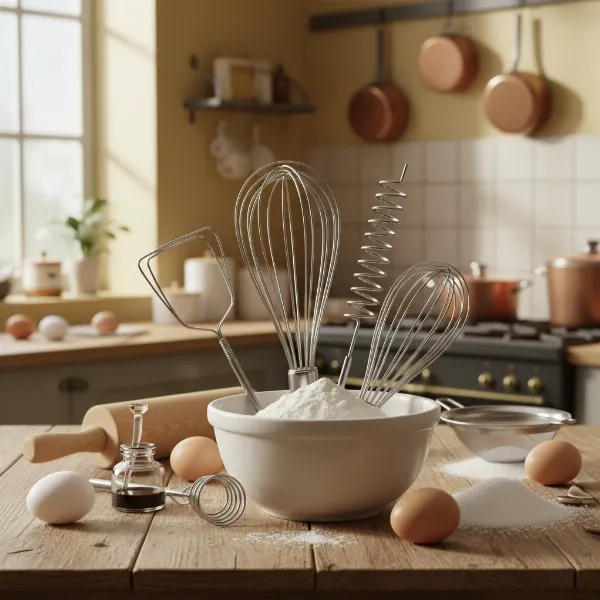 A collection of various kitchen whisks, including balloon, French, and flat whisks, arranged on a rustic wooden table with baking ingredients.
Mastering the Art: Tips for Perfect Whisking and Whipping
Achieving culinary perfection often comes down to mastering fundamental techniques. Here are some expert tips for optimal whisking and whipping:
- Use Rounded Bowls: Pastry chefs recommend using curved, circular mixing bowls. Square containers make it difficult for whisks to reach corners, leading to unevenly mixed batters.
- Ensure Clean, Dry Tools: Any grease or water droplets, especially when whipping egg whites, can prevent proper aeration and cause mixtures to collapse. Ensure your bowls and whisks are impeccably clean and dry.
- Ingredient Temperature Matters: For whipping cream, ensure both the cream and your whisk/bowl are very cold (chilling them in the freezer for 5-10 minutes can help). Cold conditions help the cream thicken faster and achieve better stability. For egg whites, room temperature is often preferred for volume, but cleanliness is more critical.
- Patience and Consistency: Especially when whipping, maintaining a consistent medium speed and motion is key to creating uniform air pockets and stable results. “Patience and consistency in whipping give you proper texture and results,” states Chef Vimal Nair, head pastry chef at Risen Café Dubai.
- Avoid Over-Mixing: While air incorporation is crucial, over-mixing can lead to undesirable textures. For batters, it can develop too much gluten, resulting in a tough product. For whipped cream, over-whipping turns it into butter. Stop as soon as the desired consistency is reached.
When to Whisk and When to Whip: A Quick Reference
| Task/Ingredient | Recommended Technique | Purpose/Outcome | Example Recipes |
|---|---|---|---|
| Eggs (lightly mixed) | Whisk | Combine yolks and whites, light aeration | Omelets, scrambled eggs, French toast batter |
| Egg Whites | Whip | Maximum aeration, increased volume, stiff peaks | Meringues, soufflés, macarons |
| Heavy Cream | Whip | Incorporate air for volume, thick, airy texture | Whipped cream topping, frosting |
| Flour & Dry Ingredients | Whisk | Combine, remove lumps, light aeration | Cake batters (dry mix), sifting substitute |
| Sauces/Gravies | Whisk | Smooth consistency, prevent lumps, emulsify | Roux, béchamel, pan gravies |
| Vinaigrettes/Emulsions | Whisk | Combine oil and vinegar, stabilize emulsion | Salad dressings, mayonnaise |
| Butter & Sugar | Whip | Lighten, aerate, create creamy texture | Creaming method for cookies/cakes, buttercream |
| Batter (Pancakes, Waffles) | Whisk | Combine ingredients, smooth consistency, light air | Pancake mix, waffle batter |
Conclusion
The terms “whisk” and “whip” may sound similar, but in the culinary world, they denote distinct techniques vital for achieving specific results. Whisking primarily focuses on blending and light aeration, ensuring even mixing and a smoother texture. Whipping, on the other hand, is a more intensive process designed to vigorously incorporate air, significantly increasing volume and creating frothy, light, and stable mixtures. Understanding this fundamental difference empowers you to choose the correct action and tool for every recipe, preventing common mistakes and consistently producing delicious, perfectly textured dishes. Embrace the subtle power of these techniques, and watch your culinary creations soar!
Frequently Asked Questions
Can you whip cream with a regular whisk?
Yes, you can whip cream with a regular balloon whisk, though it will require more manual effort and time compared to using an electric mixer. Chilling your bowl and whisk beforehand can significantly speed up the process and help achieve the desired stiff peaks.
Is a whisk the same as an egg beater?
While both are used for agitating eggs, a traditional whisk is a manual tool with wires, whereas an egg beater is typically a handheld mechanical device with rotating beaters. Both aim to incorporate air, but the egg beater offers more consistent and faster aeration for eggs.
What is a whipping cream whisk?
A “whipping cream whisk” typically refers to a balloon whisk, which is designed with many thin, flexible wires that are highly effective at incorporating air into liquids like heavy cream, yielding a voluminous, airy texture perfect for whipped cream. Its bulbous shape maximizes movement and aeration.
Do I always need to incorporate air when whisking?
Not necessarily. While whisking often involves some degree of aeration, its primary function can also be simply to combine ingredients thoroughly and create a smooth, homogenous mixture, such as when making a gravy or a smooth sauce to prevent lumps. The amount of air incorporated depends on the desired end product.